

Maximum supported data rate: 224Gbps, Input channel pitch: 750µm
Typical noise: 3.5µA (RMS), 3dB bandwidth: 60GHz, Typical gain: 3200Ω
Integrated RSSI (Received Signal Strength Indicator), supporting optical alignment and power monitoring
Low power consumption: Typical 190mW per channel
Wide input dynamic range, supporting up to 5mApp single-ended input current
Supports photodiode flip-chip bonding onto the TIA die surface, with other TIA pads connected via wire bonding
Optional reverse photodiode bias voltage, typical 4V
Operating temperature range: -5°C to +85°C
3.3V single power supply
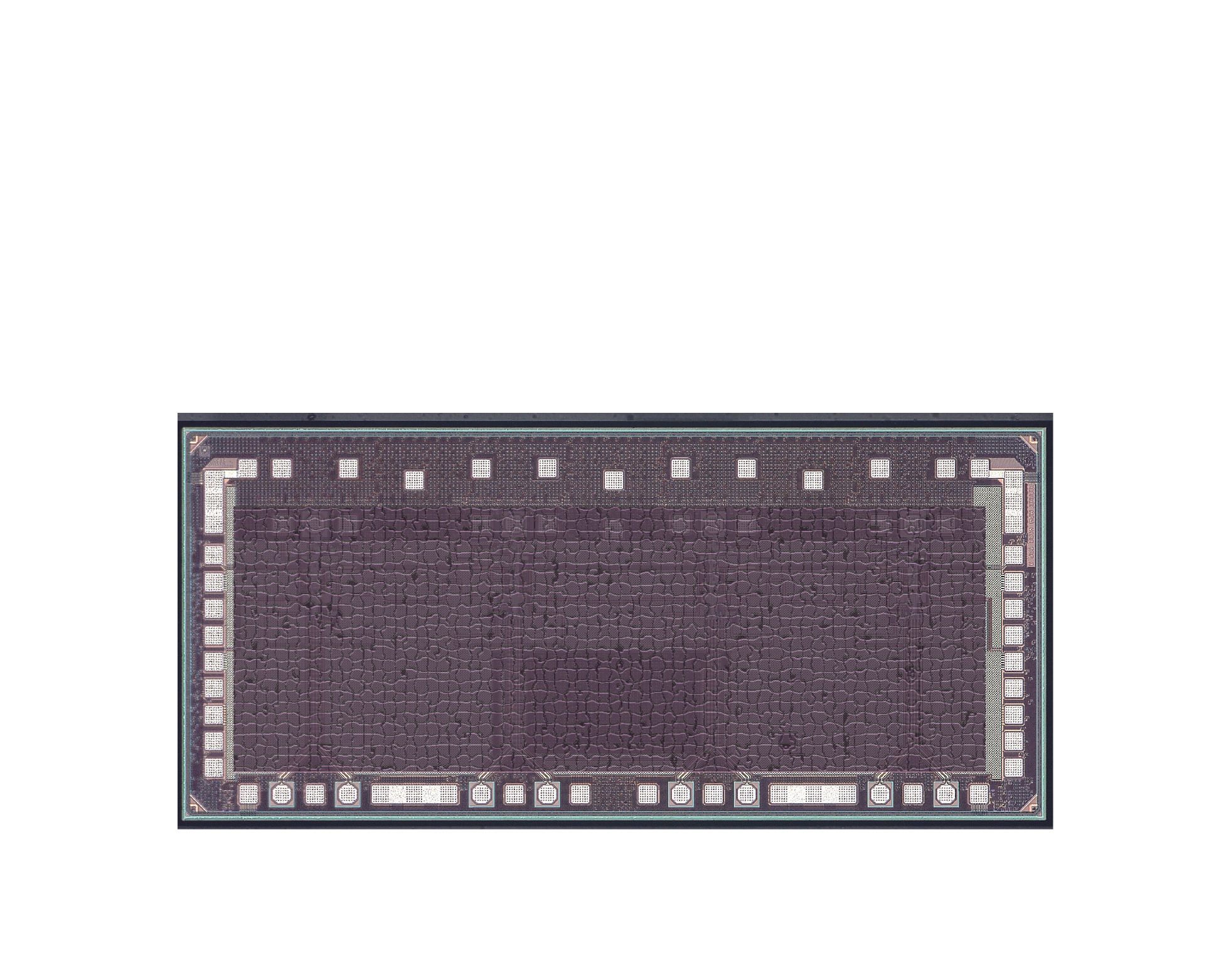
Die dimensions: 3.223 mm × 1.453 mm × 102.5 μm
PHO11264
4-channel 224Gbps PAM4 Linear Transimpedance Amplifier with 750μm Pitch (WB)
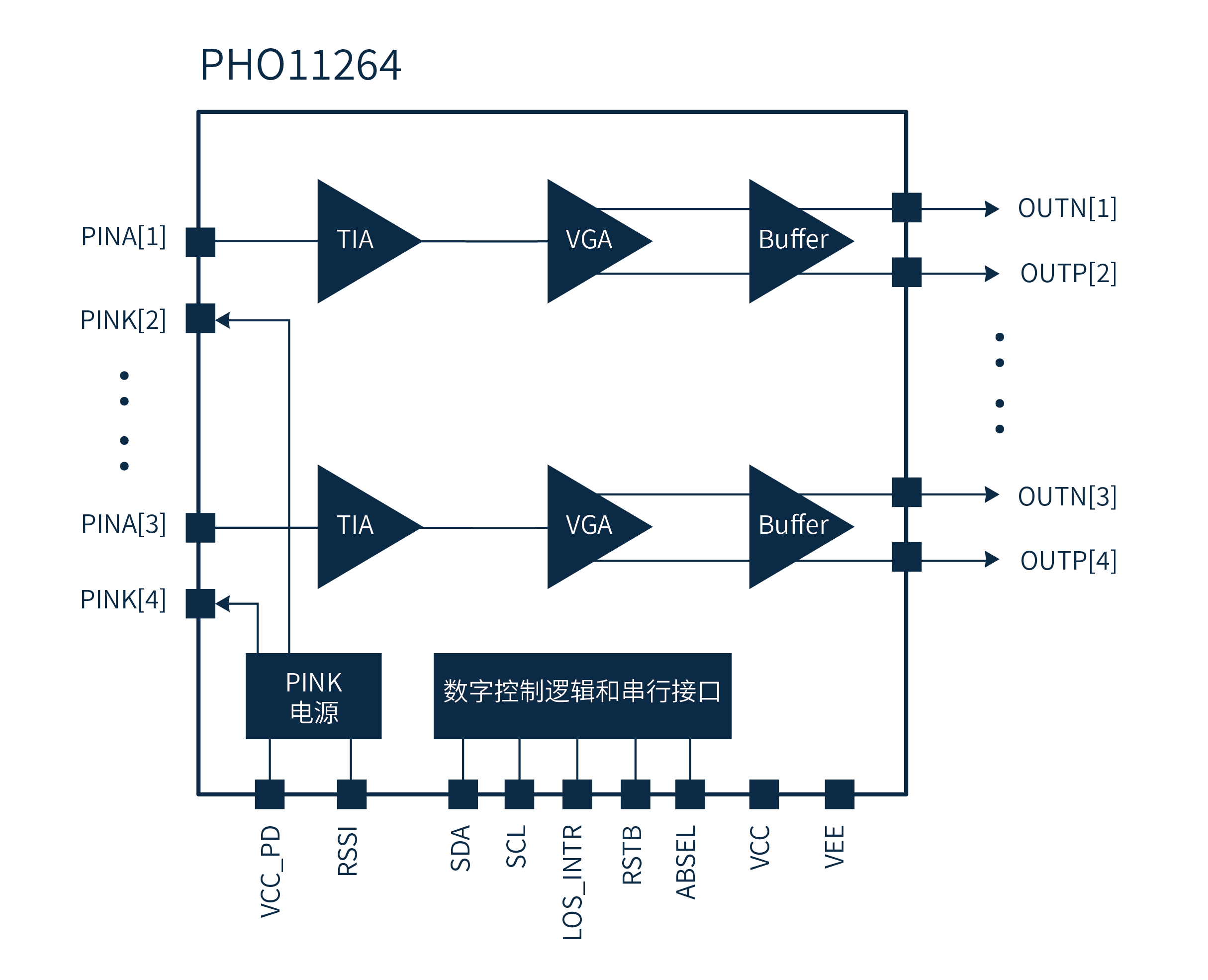
PHO11264 is a four-channel, single-ended input linear trans-impedance/variable-gain amplifier (TIA/VGA) specifically designed for single-lambda 200G optical receivers. Its single-ended input trans-impedance adjustment range is 120 Ω to 3.7 kΩ (typical), and it provides a maximum differential output voltage of 500 mVppd in AGC mode. The chip supports an extremely wide dynamic range of input optical power and provides linear amplification for single-ended input currents up to 5 mApp.
PHO11264 features a typical small-signal optical bandwidth of 60 GHz. The chip integrates an RSSI function for real-time monitoring and reporting of average input optical power.
In terms of package interconnects, the PHO11264 is pre-configured with solder bumps, supporting the direct flip-chip mounting of photodiodes (PD) onto the TIA die surface, which significantly reduces parasitic effects at the input interface and inter-channel crosstalk. PHO11264 operates on a single +3.3V power supply with a typical power consumption of 0.76 W (excluding RSSI) and is supplied in wire-bondable bare die form.
Application Block Diagram
Features
Applications
Ethernet: 800GbE/1.6TbE Single-mode/Multi-mode optical modules
Fibre Channel
InfiniBand: EDR, HDR, NDR, and XDR data rates
Optical Transport Network (OTN) and proprietary protocols